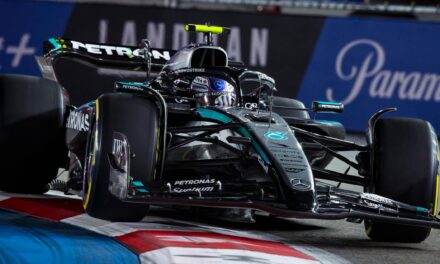
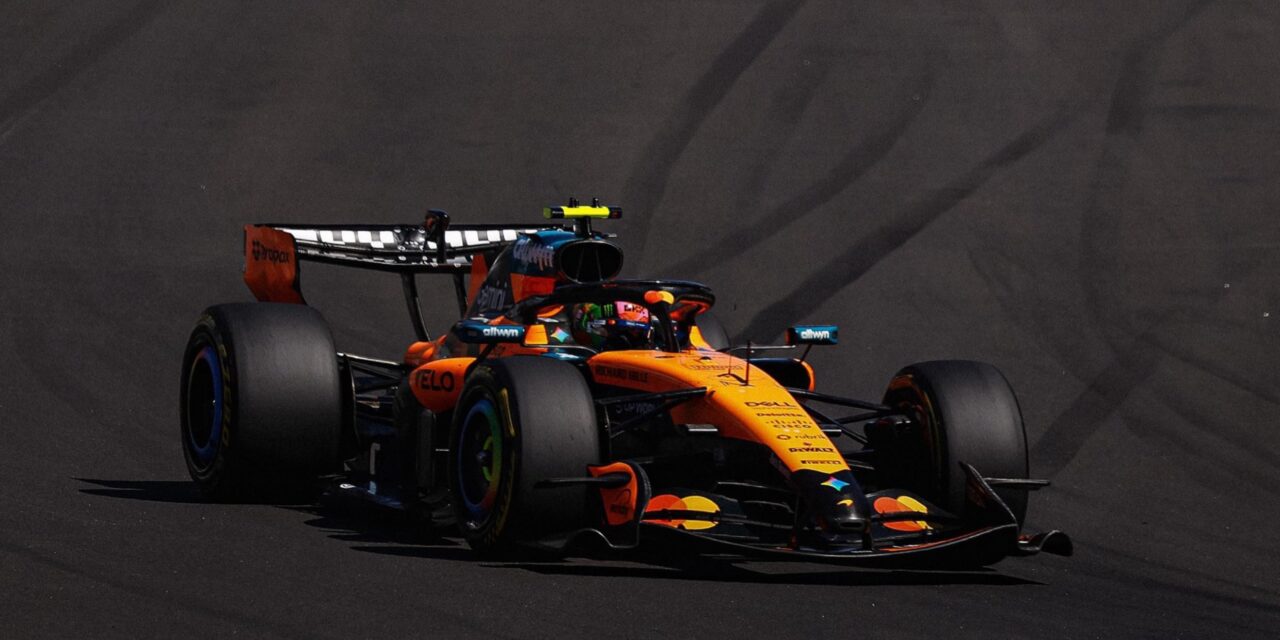
McLaren team principal Andrea Stella believes Lando Norris had enough pace to recover and win the Spanish Grand Prix, but the lack of overtaking opportunities at Madring left the reigning world champion unable to turn his speed into victory.
Norris started Formula 1’s first race at the new Madrid circuit from pole position and controlled the opening stages. The McLaren driver built a six-second advantage across the opening 12 laps, but his commanding lead worked against him when Lance Stroll’s retirement triggered a virtual safety car.
Norris was already too far beyond the pit entry when the VSC was activated, while several of his rivals took advantage of the reduced pitstop loss. McLaren stopped Norris immediately after the VSC ended, and a seven-second tyre change added to his problems.
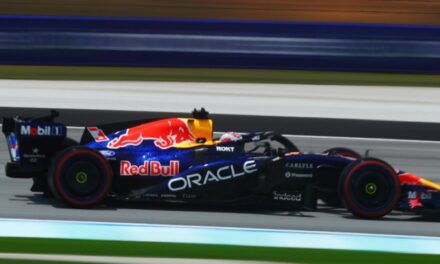
Norris eventually returned to the circuit 16 seconds behind Kimi Antonelli, who went on to win the race. Despite recovering the deficit and catching Antonelli and second-placed Max Verstappen by lap 48, Norris found no realistic opportunity to pass either driver.
Stella Says Slow McLaren Pitstop Did Not Change Result
McLaren’s slow stop attracted attention after the race, but Stella does not believe a quicker tyre change would have altered Norris’ final position.
Even with a normal stop, Stella believes Norris would have returned around George Russell. More importantly, the difficulty of passing at Madring meant track position carried greater importance than Norris’ pace advantage.
“Because probably Lando would have [come out] anyhow behind [George] Russell,” he pointed out. “And even if not, it would have not been possible to overtake Verstappen and Antonelli.
“So, definitely, we take note that there’s a lot of work to do in our operation. And it’s not the first time that we have a slow stop. But in terms of the race itself, it didn’t make a difference.”
McLaren therefore accepts its pitstop execution needs improvement, but Stella sees the timing of the VSC and Madring’s limited passing opportunities as the bigger factors behind Norris finishing third rather than taking his third Grand Prix victory of 2026.
Madring Produces Fewest Overtakes of 2026 Season
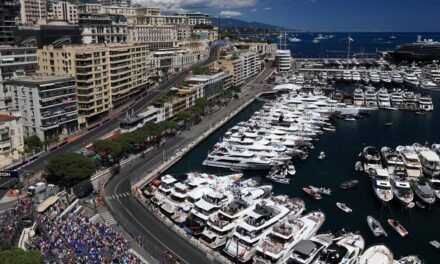
The numbers from the Spanish Grand Prix support concerns about the new Madrid circuit. Sunday’s race featured only 10 overtaking moves, the lowest total of the 2026 Formula 1 season so far.
Even Monaco produced more, with 11 passes. Four of the 10 overtakes in Madrid involved Valtteri Bottas or Stroll being passed towards the back of the field, further highlighting how little position-changing action took place among the main competitive groups.
Turn 5 had been expected to provide the main overtaking opportunity because drivers arrive there after the circuit’s longest straight. The design proved problematic during the race, though, with drivers approaching the braking zone through a curve before entering a narrow corner.
That combination made late-braking moves difficult and left drivers with limited room to run side by side.
Stella Calls for Changes to Madring
Stella believes Formula 1 should review the circuit before returning to Madrid in 2027. While Madring produced a demanding qualifying challenge, the McLaren boss felt the layout failed to provide enough opportunities for drivers to race each other on Sunday.
“When it comes to overtaking, it’s a shame that it’s so difficult,” Stella added. “It just requires a large, large lap time difference to be able to overtake. I think what F1 will have to review is whether there are some modifications required at this circuit in order to introduce an overtaking possibility.
“Because at the moment, the fact is that the straight may be long enough, but there’s absolutely no way that two cars can enter [Turn] 5 together. So it’s basically impossible an attempt of overtaking – which is a bit of a shame, because I think if overtaking was possible today, we would have [had] Lando regaining the lead, because the pace advantage was significant.”
Norris’ Pace Leaves McLaren Wondering What Might Have Been
Norris had shown his speed throughout the weekend. He secured pole before controlling the first stint, opening a substantial advantage while other drivers struggled with tyre graining.
The VSC changed the race by allowing Antonelli, Verstappen and other rivals to stop at a reduced time loss. Norris missed the opportunity through timing and then faced the difficult task of recovering positions on a circuit where overtaking proved rare.
His pace remained strong enough to erase the large gap after his stop. By the closing stages, Norris had joined Antonelli and Verstappen in the fight at the front, but catching them and passing them proved to be two different challenges.
Antonelli eventually pulled clear to claim his eighth victory of the season, while Verstappen held Norris behind to take second. Norris completed the podium despite appearing to have the fastest race pace.
Pressure Grows for Madring Changes Before 2027
Stella’s comments add to growing criticism of Madring’s overtaking problems following its first Formula 1 weekend. Spanish Grand Prix organisers have already indicated they are open to modifying the circuit, with the FIA providing recommendations ahead of the 2027 event.
For McLaren, the immediate frustration centres on a victory slipping away despite Norris having the pace to control the Grand Prix. Stella accepts the team’s slow pitstop needs attention, but he does not believe improving the stop alone would have changed the outcome.
Instead, Norris’ race exposed the importance of track position at Madring. Once he dropped behind Antonelli and Verstappen, even a significant pace advantage was not enough to find a way through.
For Stella, easier overtaking would have produced a different race. He believes Norris had the speed required to regain the lead and win, but Madring’s current layout gave him little opportunity to prove it.