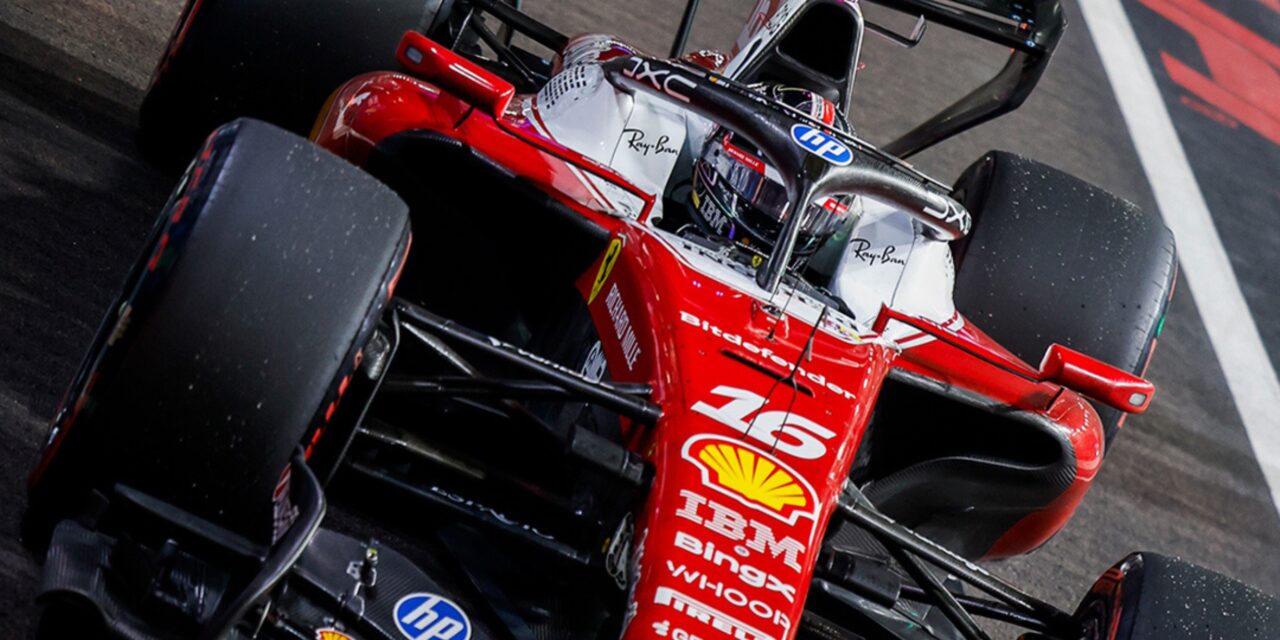
Charles Leclerc believes Ferrari’s biggest problem during the 2026 Formula 1 season comes down to the “raw performance” of the SF-26 rather than its setup or balance.
Ferrari has endured a mixed campaign despite regularly showing competitive pace. The Scuderia has often looked strong during Friday practice before losing ground to Mercedes, Red Bull and other rivals when qualifying begins.
Leclerc believes rival engine modes help explain why Ferrari appears closer during practice than during the competitive sessions.
His comments come ahead of the United States Grand Prix, where Ferrari is expected to introduce its largest aerodynamic upgrade package of the season.
Leclerc Explains Ferrari’s Friday Performance
Ferrari has regularly started race weekends strongly, raising expectations before qualifying.
Leclerc believes those Friday results do not always provide an accurate picture of the competitive order because rival teams use different power unit settings during practice.
“I’m not sure we are particularly good on Fridays,” he admitted. “I mean we are, but I believe it comes more from the engine modes that others are running, and once we come to qualifying, they just have something that we don’t.”
Ferrari has faced a straight-line performance deficit during the season after opting for a smaller turbo designed to improve performance at lower speeds.
The decision initially offered benefits in other areas, but Ferrari has since lost some of the advantage as rival teams developed their cars.
Ferrari Arrives at Tracks With a Strong Balance
While outright performance remains a concern, Leclerc believes Ferrari has done a strong job preparing its cars before race weekends.
The SF-26 often arrives at the circuit with a setup which gives its drivers confidence from the opening practice session.
Leclerc credits Ferrari’s simulator programme and improving correlation between its development tools and the real car for this strength.
“One of our strengths as a team is straight from the get-go having a car with a good balance,” he said. “I think our car is quite peaky, but I think we do a very good preparation before the weekend on the simulator.
“The correlation has been quite strong recently, which helps us to do the work on the simulator back at home, and then arrive at the track and have a strong car straight away and a car I feel comfortable with.”
Strong correlation is particularly important as Ferrari prepares to introduce its final major SF-26 development package in Austin.
Leclerc Says Setup Changes Will Not Solve Ferrari’s Problem
Leclerc does not believe changing the basic characteristics of the SF-26 would suddenly release a significant amount of additional lap time.
Instead, he believes Ferrari simply lacks the underlying performance of its main rivals.
“It’s not that if we design a very peaky car, then we can extract more out of it,” he said. “The raw potential of the car is not at the level of our main competitors, but I don’t think making it more peaky will be able to extract anything more.
“I think it’s just the raw performance of the car where we are a bit down at the moment.”
That assessment places greater importance on Ferrari’s upcoming development package.
Rather than searching for performance through setup changes alone, Ferrari needs its new components to add genuine aerodynamic performance to the SF-26.
Ferrari Bringing Major Upgrade to United States GP
Ferrari is preparing its fourth and largest aerodynamic upgrade package of the season for the United States Grand Prix at the Circuit of the Americas.
The package includes changes to the floor, sidepods and upper bodywork.
The floor represents a major area of focus, with Ferrari working to increase downforce, improve aerodynamic balance and widen the SF-26’s operating window.
Ferrari has decided against making a major change to its existing sidepod philosophy. Instead, the team has focused on refining the current design while attempting to reduce drag.
Austin is expected to mark the final major aerodynamic development package for the SF-26. Further changes during the remaining races should focus mainly on circuit-specific requirements as resources increasingly move towards Ferrari’s 2027 project.
Ferrari Showing Improved Results
Ferrari has waited since the British Grand Prix for another race victory, with Leclerc taking the team’s most recent win at Silverstone.
Recent results have still provided encouragement.
Ferrari outscored Mercedes at the Bahrain Grand Prix at Sepang and again at the Singapore Grand Prix.
Leclerc finished fourth in Malaysia before taking second behind Max Verstappen in Singapore. Lewis Hamilton finished third at Sepang and sixth at Marina Bay.
Those results have helped Ferrari strengthen its position in the constructors’ championship, although Mercedes still holds a sizeable advantage.
Ferrari Needs More From SF-26 in Austin
Ferrari heads into the United States Grand Prix sitting second in the constructors’ standings with 444 points, 134 behind Mercedes.
Hamilton occupies third in the drivers’ championship with 229 points, while Leclerc sits fifth on 215.
The Austin upgrade therefore arrives at an important stage of Ferrari’s season.
Leclerc believes Ferrari already understands how to produce a balanced car and prepare effectively through its simulator work. The bigger issue is finding enough underlying performance to compete consistently with the fastest cars.
As Leclerc put it, “I think it’s just the raw performance of the car where we are a bit down at the moment.”
Ferrari’s new floor, sidepods and bodywork will now provide an important test of whether the Scuderia has found some of the performance missing from the SF-26 before major development turns towards 2027.