
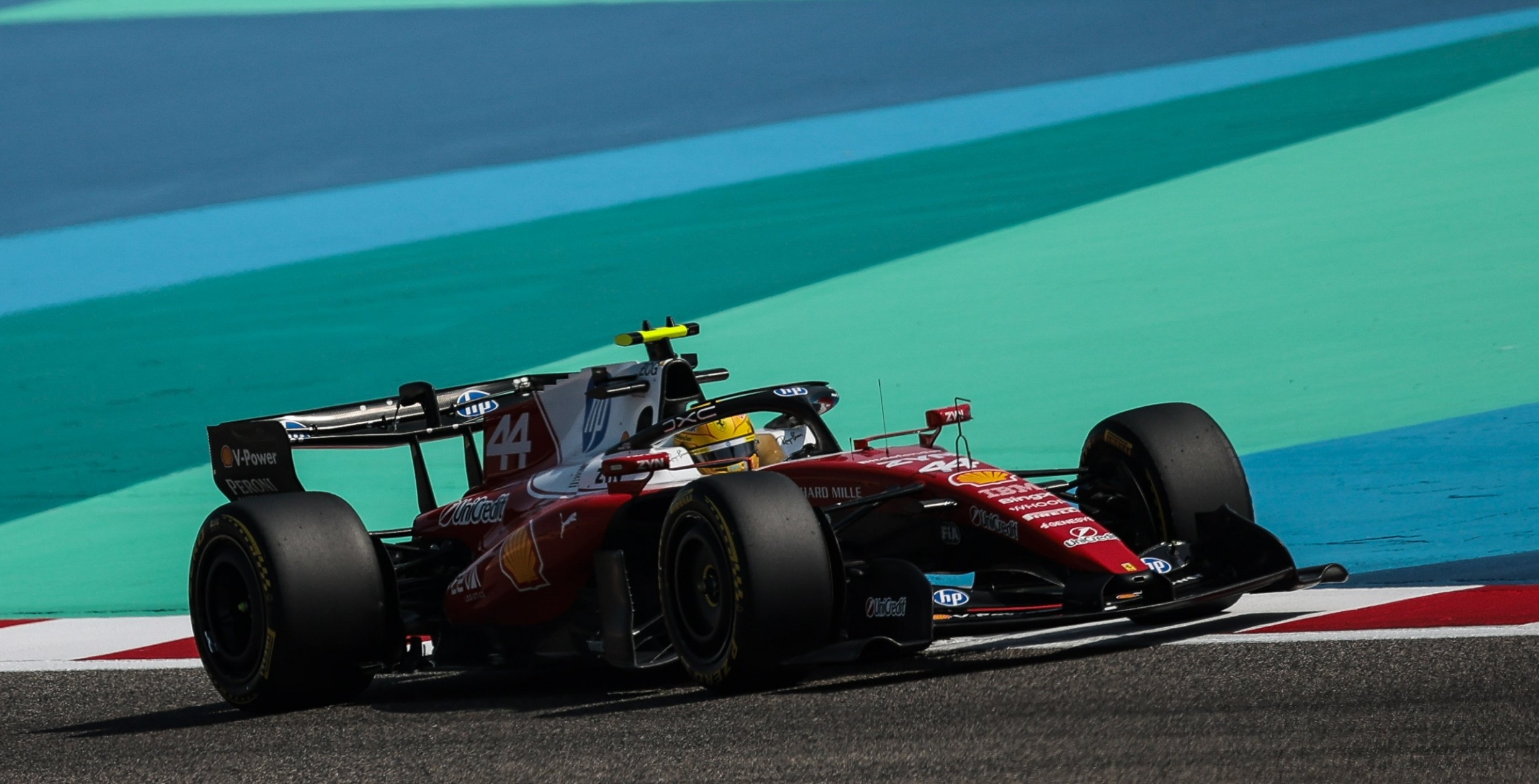
In the second Bahrain F1 test session, Scuderia Ferrari will roll out an updated SF-26 that features new aerodynamic components and a fresh power unit.
Ferrari heads back to Sakhir armed with a revised aero package and a brand-new engine, following extensive mileage from the original unit that debuted at Fiorano. That power unit went on to complete more than 4,300 kilometres across the Barcelona and Bahrain Formula 1 tests, a figure that equates to roughly 14 grands prix worth of running without any major reliability concerns.
The only setback came on the final day in Bahrain, when the engine shut down just a few laps before the end of Lewis Hamilton’s long-run simulation.
Team principal Fred Vasseur clarified the situation, explaining that the stoppage occurred during a fuel pick-up test. The aim was to determine the precise amount of fuel required in the tank to comply with the FIA’s regulation mandating one litre remaining after the race for conformity checks. Fuel consumption was slightly higher than simulations had predicted, but the data gathered is considered valuable for refining upcoming race simulations.
Following its heavy workload, the 067/6 power unit will now undergo detailed wear inspections under the supervision of Ferrari engine technical director Enrico Gualtieri and his department.
From Wednesday onwards, Ferrari will run a fresh power unit and is also expected to introduce a new gearbox. The 2026 energy recovery strategies have forced teams to use shorter gear ratios than in previous seasons, increasing engine revs to help mitigate turbo lag. However, this approach places greater stress on individual gears and the gearbox as a whole. Reinforcements could therefore be evaluated to avoid potential reliability issues.
Ferrari is not alone in facing this challenge. Across the grid, teams are closely monitoring transmission wear, which could unexpectedly become a performance differentiator under the new regulations.
Ferrari: Advantage off the line
One of Ferrari’s key technical choices during the design of the 067/6 was opting for a smaller Honeywell turbine compared to rivals such as Mercedes. The reasoning was clear: better control of turbo lag. By reducing reliance on the MGU-K during acceleration, Ferrari can instead deploy more electrical energy on the straights.
That decision may prove particularly beneficial at race starts.
Simulations in Bahrain showed that generating optimal boost requires pushing the internal combustion engine to higher revs to properly spool the turbo. Power units equipped with larger turbines need more time to complete that process.
Observations in Sakhir suggested it takes roughly 10 seconds to activate the starting system. This potentially disadvantages drivers arriving late to their grid slot, as those at the front have ample time to arm the procedure.
Ferrari’s “small turbo” philosophy is partly why the team is resistant to regulatory adjustments in this area. However, McLaren team principal Andrea Stella has expressed safety concerns, warning of the risk of cars stalling on the grid if the procedure is not managed carefully.
The F1 Commission is scheduled to meet this week to discuss the matter. Compromises may be explored, not only regarding starting procedures but also other hot topics, including the ongoing debate surrounding the Mercedes engine’s compression ratio.
As Ferrari prepares to unleash its updated SF-26 in Bahrain, attention will not only be on lap times, but also on how effectively the Scuderia has balanced reliability, performance and regulatory interpretation in Formula 1’s bold new era.