
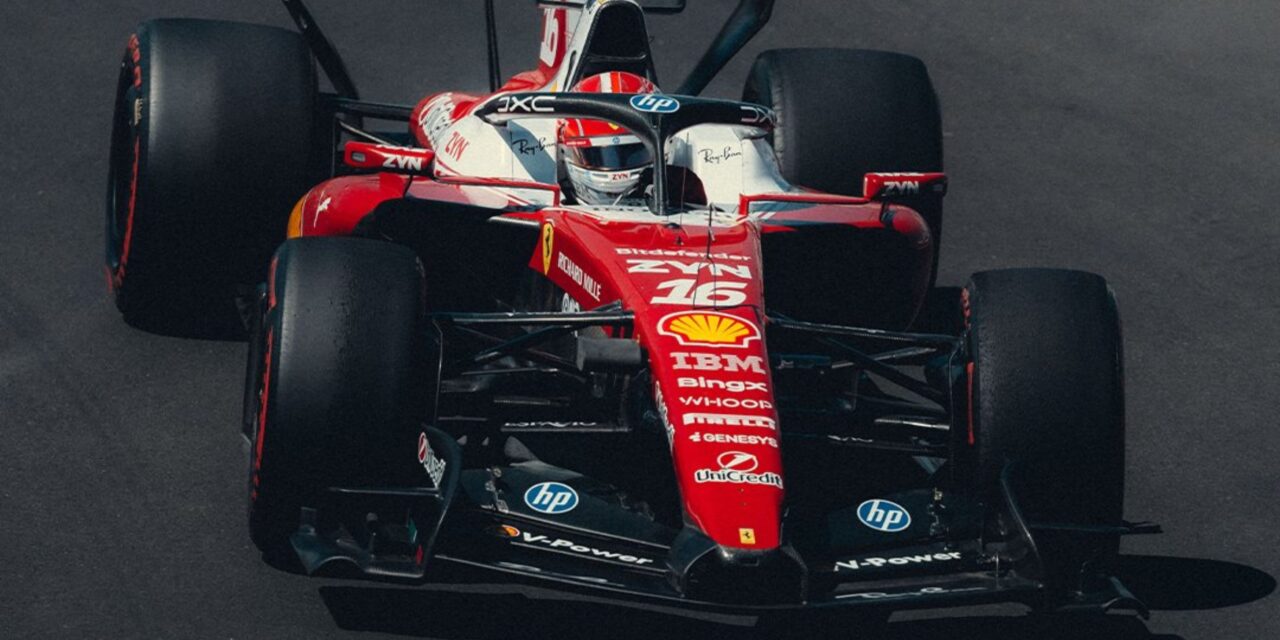
Ferrari team principal Fred Vasseur has confirmed the team will continue developing its SF-26 throughout the 2026 Formula 1 season, despite losing further ground to Kimi Antonelli and Mercedes at the Spanish Grand Prix.
Ferrari left Madring with another difficult result after Lewis Hamilton retired with a brake problem and Charles Leclerc finished fourth. Hamilton now sits 101 points behind championship leader Antonelli, while Ferrari trails Mercedes by 145 points in the constructors’ standings.
With the championship entering its later stages, Ferrari faces a decision over how to divide resources between improving its current car and preparing its 2027 challenger. Vasseur insists development of the SF-26 will continue, partly because much of the work completed this season will remain relevant next year.
Ferrari Not Ready to Abandon SF-26
Formula 1’s cost cap and aerodynamic testing restrictions force teams to manage development resources carefully throughout the season. Ferrari has also already introduced the two ADUO engine upgrades available to the team, placing greater emphasis on improvements elsewhere in the package.
Several teams have already started working on their 2027 cars, but Vasseur sees no reason for Ferrari to move its entire focus away from the SF-26.
The situation differs from 2025, when teams faced the major technical regulation changes introduced for 2026. Development completed on the current generation of cars now has greater relevance for the following season.
“We are not in the situation of 12 months ago,” the Frenchman said, referring to F1’s regulatory overhaul for 2026. “Today, what we will develop, we will be able to carry it over on next year’s project. We will continue to work, but perhaps on different things, different aspects.
“The development that we do now, 80% will be carried over.”
That level of crossover gives Ferrari an incentive to continue improving the SF-26 even as its championship position becomes increasingly difficult. Work completed during the remaining races should also contribute towards the team’s 2027 programme rather than serving only the current campaign.
Vasseur Refuses to Call Ferrari Title Fight Over
Antonelli’s victory in Madrid increased the pressure on Ferrari. The Mercedes driver has now won eight Grands Prix this season, including consecutive victories at Monza and Madring.
Hamilton’s retirement leaves him 101 points behind Antonelli in the drivers’ championship, while Ferrari’s 145-point deficit to Mercedes presents an even larger challenge in the constructors’ standings.
Asked whether Ferrari’s championship fight against Antonelli and Mercedes was effectively over, Vasseur refused to make such a declaration and maintained his existing approach of focusing on each individual Grand Prix.
“Two or three weeks ago I told you that I will take race by race. I didn’t change,” he insisted.
Ferrari Qualifying Pace Becomes Major Focus
Qualifying has emerged as one of Ferrari’s biggest weaknesses since Formula 1 returned from its summer break. Neither Hamilton nor Leclerc has started from the front row across the four qualifying sessions held during that period, including the sprint qualifying session at Zandvoort.
Their average starting position across those sessions has been fifth, while Ferrari’s average deficit to pole stands at 0.198 seconds. That places the SF-26 behind Mercedes and McLaren over one lap, although ahead of Red Bull by the same measure.
Ferrari’s race performance has often looked stronger than its qualifying results suggest. Vasseur therefore believes improving how the team extracts performance throughout qualifying should become a priority.
“This we need to improve, because I think when you have a look on the pace, during the race the pace is there,” Vasseur said. “For sure we need to do a better job in quali.
“If you take Zandvoort and this one, the profile of the event is a little bit the same for us. We had a decent pace in quali, but we didn’t put everything together on the last attempt, and race pace is OK.”
Vasseur Wants Ferrari to Improve Through Qualifying
Vasseur’s concern goes beyond the SF-26’s outright qualifying speed. Ferrari has shown enough performance during earlier parts of qualifying sessions to suggest stronger grid positions are available, but the team has struggled to extract the expected improvement when conditions evolve.
That problem was evident again in Madrid. Ferrari remained competitive at stages of qualifying, yet failed to turn its potential into a front-row start.
“If I have to put the focus of the team on something today, it would be the evolution of the pace during the quali – more than the pace in quali, the evolution, the steps that you can do. We were there on run one Q3, the potential is there, we just have to adapt everything further on.”
Starting closer to the front would also give Ferrari more opportunities to use its stronger race pace. Track position proved particularly important at Madring, where overtaking was difficult throughout Sunday’s Grand Prix.
Ferrari Still Searching for Complete Weekends
The Spanish Grand Prix continued a frustrating run for Ferrari following the summer break. At Monza, Leclerc crashed out on the second lap while Hamilton recovered to sixth. One week later in Madrid, Hamilton’s brake failure left Ferrari with only one car at the finish.
Leclerc’s fourth place provided useful points, but Ferrari again left a weekend without converting its potential into a result strong enough to reduce Mercedes’ championship advantage.
The focus now shifts towards extracting more from qualifying while continuing development of the SF-26. With Vasseur estimating that 80% of Ferrari’s current development work will transfer into its 2027 project, the team sees value in pushing forward even as its 2026 title prospects become more difficult.
Ferrari therefore has two connected objectives for the remaining races. The team wants stronger results from the SF-26 now while using its development programme to establish a stronger base for 2027.