Former Haas boss Guenther Steiner believes Mercedes will face increasing pressure as rivals unlock performance across the 2026 season.
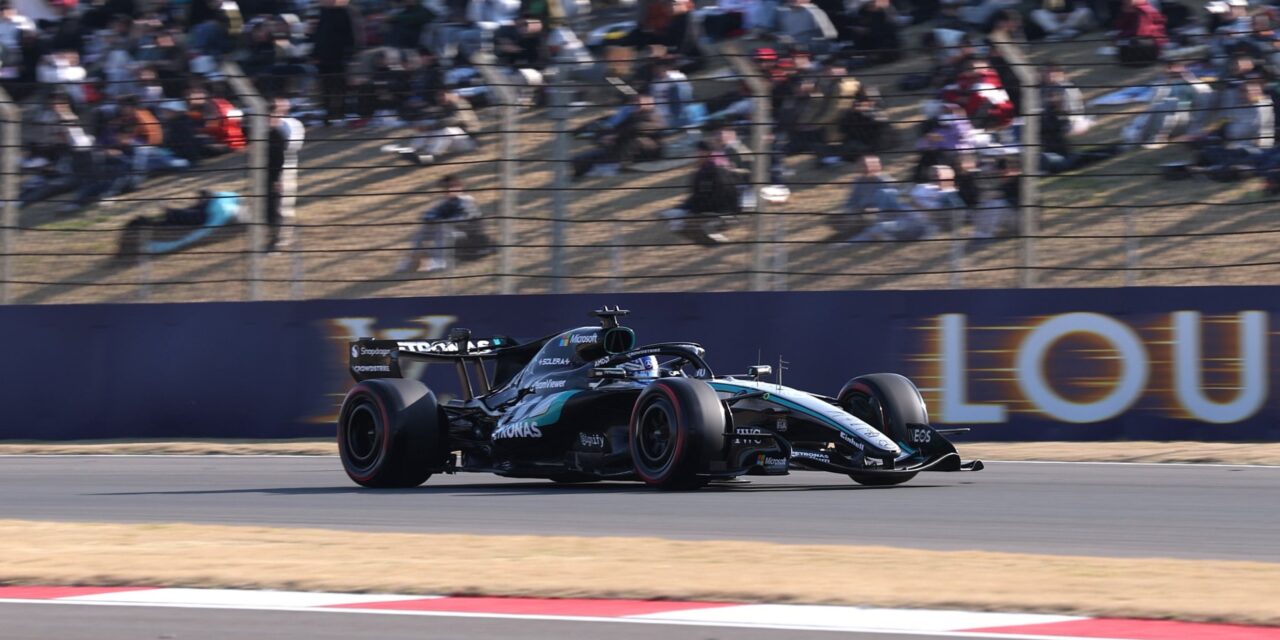
Mercedes has started strongly. After two rounds, the team leads the constructors’ standings with 98 points, 31 clear of Ferrari. George Russell won in Australia and the China sprint, while Kimi Antonelli secured his first grand prix win in Shanghai.
Despite that dominance, Steiner expects the gap to close.
Guenther Steiner on Mercedes 2026 F1 form and rival progress
Steiner pushed back on the idea that Mercedes will control the entire season.
“The only thing that I would say is that we jump to the conclusion, ‘Oh this will be now Mercedes until the end of the year,'” Steiner said during The Red Flags Podcast.
He pointed to the learning curve under the new regulations as a key factor.
“I think the other Mercedes [powered] teams will learn more about their car, how to manage their PU, McLaren more than anybody else. I think Mercedes will be strong, but will somebody take the fight to them? I think so. I think at some stage somebody will take the fight to them because the development this year will be tremendous.”
Development race set to define Mercedes 2026 F1 advantage
Steiner believes Mercedes has the best starting point, but not the most room for improvement.
“How people get better, and how people learn to get more out of the car. I think Mercedes is best prepared for that – is better prepared than anybody else. But I think the other teams have got more in the pipeline to discover, to make their cars better with stuff already there. Not to develop, to get more out of the package they’ve got.”
This suggests teams like McLaren could close the gap quickly as they better understand energy deployment and car balance.
Japanese Grand Prix and schedule break could shift momentum
The next race takes place at Suzuka Circuit for the Japanese Grand Prix.
After that, the calendar pauses. The Bahrain and Saudi Arabian races have been cancelled, creating a five week gap before Miami.
That break matters as teams gain time to analyse data, upgrades become more likely and performance gaps can shrink quickly.
Mercedes leads now. Steiner expects that to change as development ramps up.