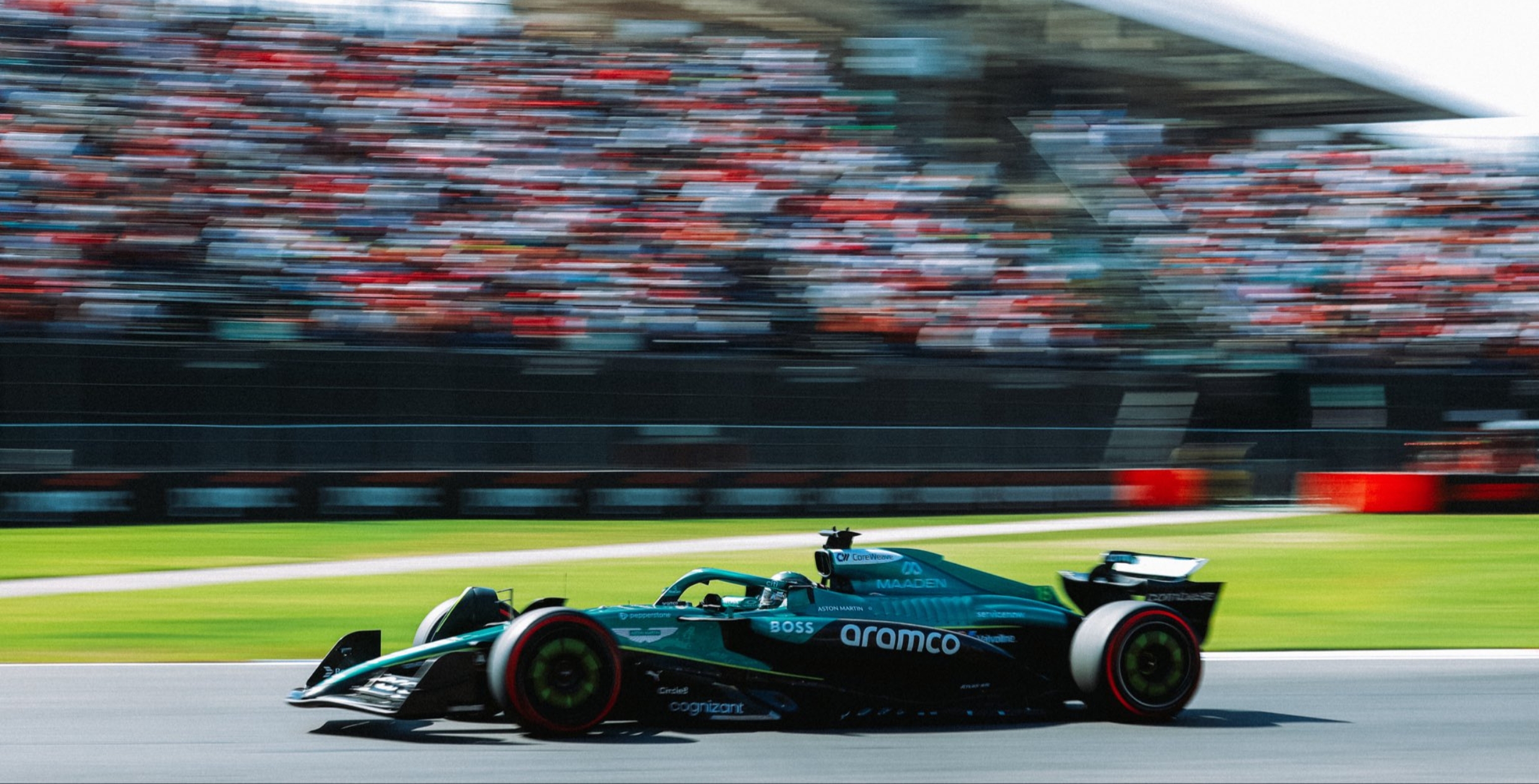
Honda has revealed further details behind the serious vibration issues that forced it and Aston Martin to curtail their 2026 Formula 1 pre-season testing programme, describing the situation as both “dangerous” and “extremely challenging”.
The Japanese manufacturer is now working around the clock to resolve the problem ahead of the season-opening Australian Grand Prix, after what proved to be a deeply troubled winter testing campaign with its new partner, Aston Martin.
A Difficult Start to the Partnership
Aston Martin and Honda endured a disrupted build-up to 2026 from the outset. Limited mileage at the Barcelona shakedown, due to the AMR26 being delivered late, was followed by further technical setbacks across the two Bahrain test weeks.
By the end of testing, Aston Martin had completed just 2115 kilometres in total, barely a third of the mileage logged by Mercedes, Haas and Ferrari, and just over half that of Cadillac. As Aston Martin is Honda’s sole F1 partner, the reduced track time has also significantly limited running for the new Sakura-built power unit.
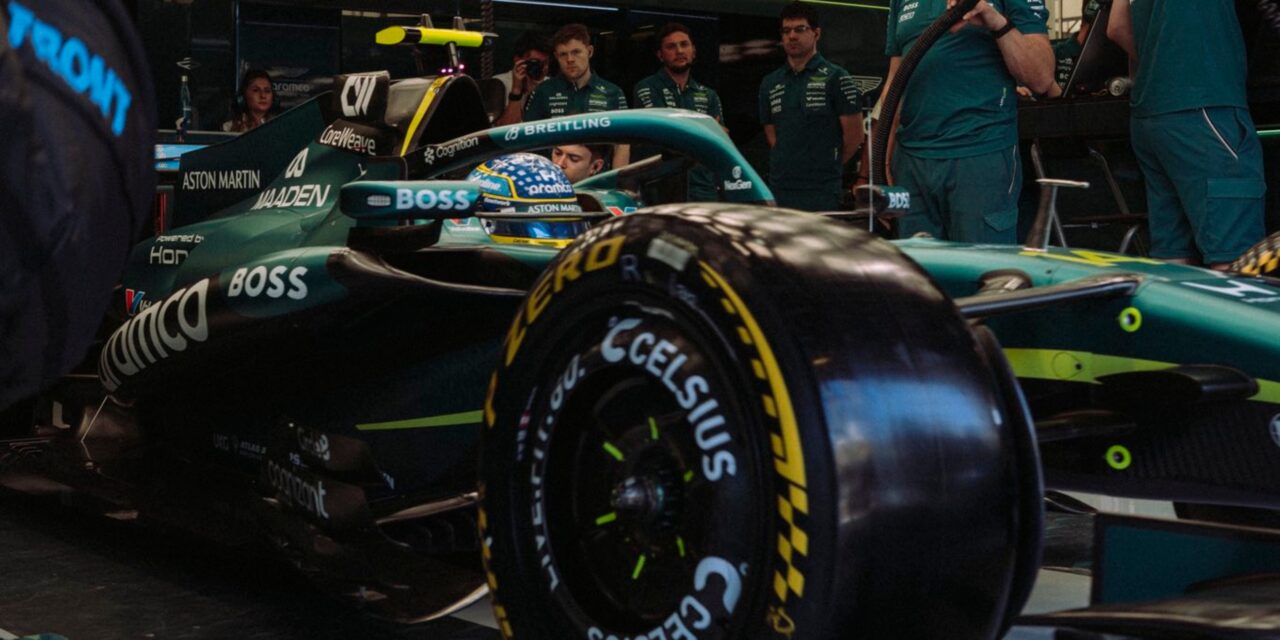
The situation reached a low point on the final day of the second Bahrain test, when Aston Martin was forced to end its programme early after running out of spare batteries, completing only six installation laps.
“It was dangerous”
Speaking to Japanese media, including Motorsport.com’s Japanese sister publication, Honda outlined the root cause of the issue: excessive vibrations originating from the V6 combustion engine.
“The abnormal vibrations observed during testing caused damage to the battery system, which was the primary reason for the stoppage,” said Ikuo Takeishi, head of the HRC four-wheel racing department about Fernando Alonso’s curtailed fifth test day in Bahrain.
“We stopped the car because we felt it shouldn’t continue running in that state. It wasn’t that an accident was imminent or anything like that, but we stopped the car because it was dangerous.
“The PU side is naturally investigating the cause and working on countermeasures, while simultaneously implementing measures on the chassis side. Specifically, we are currently using the Sakura battery on a bench with the monocoque mounted, actively running multiple countermeasures while conducting vibration countermeasures and analysis.”
Takeishi explained that it remains unclear whether the battery itself is fundamentally at fault, or whether it is simply a victim of broader vibration forces within the chassis.
“The vibrations caused damage to the battery, so we cannot say whether the battery itself is the problem,” he elaborated. “You could think of it as the battery pack being shaken within the vehicle body. Essentially, the area where the battery pack is attached is vibrating. Had this been within expectations, I believe we would have made further adjustments. As it stands, I suspect we’ve encountered a rather challenging situation.
“For instance, if the cause were pinpointed to something like the transmission or the engine, it would be much easier to tackle. However, I suspect multiple components are interacting to generate the vibration. Given that, it’s unclear whether fixing one part alone will resolve it, so we can’t rule out the possibility of this dragging on. That said, purely in terms of determination, I’m absolutely intent on fixing it quickly.”
The concern is that the vibration issue may not stem from a single isolated component, making diagnosis and resolution far more complex.
A Compromised Start to 2026?
With limited mileage gathered and unresolved vibration concerns, Aston Martin and Honda could face a challenging start to the season. Honda is targeting meaningful progress by the Japanese Grand Prix at Suzuka, round three of the campaign.
“I’m aiming to reduce the vibration before the season opener, but I intend to get the car into a competitive state before Suzuka,” Takeishi said.
While there is confidence that overall performance will improve once the vibration issue is controlled, Honda is not yet in a position to make bold claims.
“Extremely challenging”
HRC president Koji Watanabe acknowledged the scale of the challenge but stressed the long-term commitment between the two organisations.
“The recent pre-season tests in Barcelona and Bahrain were, frankly speaking, extremely challenging for us,” Watanabe said. “We were unable to achieve the performance levels we had anticipated, and a complex set of issues became apparent. However, these tests were also a crucial process in that they allowed us to visualise these challenges.
“There may be various issues on both sides, but we are aiming for a long-term partnership, and at this stage I believe we are united in our desire to resolve matters as one team,” Watanabe said. “I have had very positive discussions on the phone with chairman [Lawrence] Stroll and [Adrian] Newey about how to resolve the situation. With the season opener approaching, it goes without saying that we will do our utmost to ensure we are ready to race in Australia.
“Naturally, the drivers testing are understandably frustrated, but we can only address that through performance.”
For Honda and Aston Martin, the early weeks of their new partnership have been far from smooth. But with intensive bench testing underway and senior figures determined to turn the situation around, the focus now shifts to how quickly they can stabilise the package before Melbourne, and whether meaningful gains can be delivered by Suzuka.
Aston Martin set to DNF in Australian GP due to Honda crisis