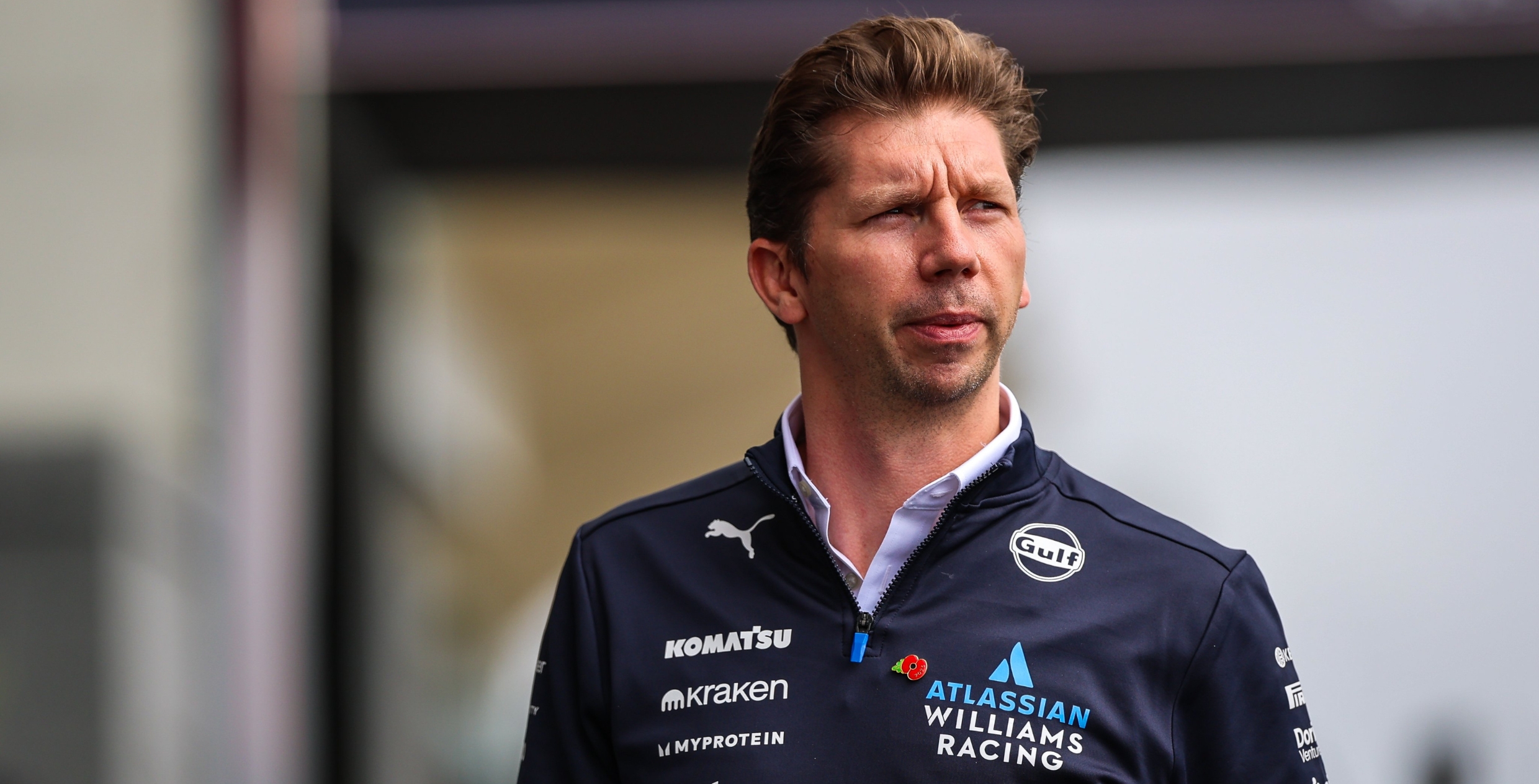
Williams team principal James Vowles has defended Mercedes’ new 2026 power unit amid growing scrutiny in the Formula 1 paddock, insisting it is fully legal and warning against the sport drifting toward a Balance of Performance style formula.
As winter testing begins in Bahrain, much of the conversation centres around one technical term: compression ratio. Rival manufacturers have been closely examining the Mercedes engine, which complies with the mandated 16:1 compression ratio during static FIA tests, but is believed to achieve a higher ratio when running under track conditions.
Audi, Ferrari and Honda quickly sought clarification from the FIA in a joint letter, while Red Bull’s position is understood to be more nuanced than first reported. The governing body must now decide whether to revise the measurement procedures and, crucially, when any changes might be implemented.
Any regulatory adjustment would first require a supermajority within the Power Unit Advisory Committee, meaning four of the five manufacturers, along with the FIA and FOM, would need to agree.
What Vowles had to say on the Mercedes PU
Vowles, however, made his stance crystal clear.
“My harsh line on it is the PU that we have in the car is completely compliant with the regulations. It is not a month of work but several years of work to produce the PU to that level. We, as a sport, have to take care that this is not a BOP series. This is a meritocracy where the best engineering outcome effectively gets rewarded as a result, not punished as a result,” Vowles told media.
He acknowledged frustration from rivals but stressed that early conclusions about the competitive order are premature.
“I’m sure other teams are pissed off. They weren’t able to achieve what Mercedes did, but we also need to take care. Right now, I don’t think there’s a person in the pitlane that can tell you what is the best PU, and we only focus on one detail of it.
“My hope is that sense prevails and that we, as a sport, recognise that we are here to be a meritocracy, and that the best engineering solution wins as a result of it. Therefore we are where we are right now, but I maintain that our PU is completely compliant with all regulations.”
Vowles emphasised that Mercedes’ ability to interpret and maximise regulations is precisely why Williams continues its long-term engine partnership with the German manufacturer.
“I’ve been with Mercedes for 23 years, pretty much from the start of my career that’s what I’ve always been a part of. The day I joined [this team], I re-signed the Mercedes arrangement here at Williams for pretty much that reason – which is that they are incredibly good at regulation changes, reading the rules exactly as the rules are, and making sure you push the boundaries of engineering. That is exactly what the PU represents right now for Mercedes.”
He also warned that altering the measurement procedures would not be straightforward and could create wider implications for the grid.
“First of all, they have to come up with a regulation, and good luck with them, where you’re testing power units in the conditions you’re trying to run on track. Anyone that knows anything about compression ratios, even if you’ve done your own cars, you kind of want to do it when it’s ambient.
“I’m sure they can determine a way of testing it, but the next element is that there are now two more steps. One: are we compliant even with any future regulation changes? No one knows that one particularly. And the second element of things is what do you do when you have effectively changed the rules? That now means that if we are not legal to it, that there are eight cars not participating on the grid. And that’s what I meant by we, as a sport, have to really think about what the implication of this change is.”
Despite defending Mercedes’ position, Vowles acknowledged the FIA’s difficult role in policing a highly competitive and technically complex championship.
“To defend the FIA, the FIA has a hard job. You have teams filled with a thousand individuals thinking about how we can interpret the rules in a clever way. Let’s be blunt about it, that’s what teams do, and that’s why we love the sport. It is difficult [for the FIA]. There’s 20-odd people trying to fight against 10,000 out there on the grid. It’s probably not that amount, but you get the idea behind it.
“The FIA do a really good job, generally speaking, of finding the boundary between clever interpretation and allowing it to go forward. What I’m stating here is that we need to take care that it’s not just politically driven by other teams that didn’t think of clever innovations now, and the FIA’s job is to take a correct line of action on all of this.”
With the 2026 regulation era still in its infancy, the compression ratio debate could become one of the defining technical storylines of the season. But for now, Williams and Mercedes remain firm in their belief that innovation, not restriction, should determine success in Formula 1.