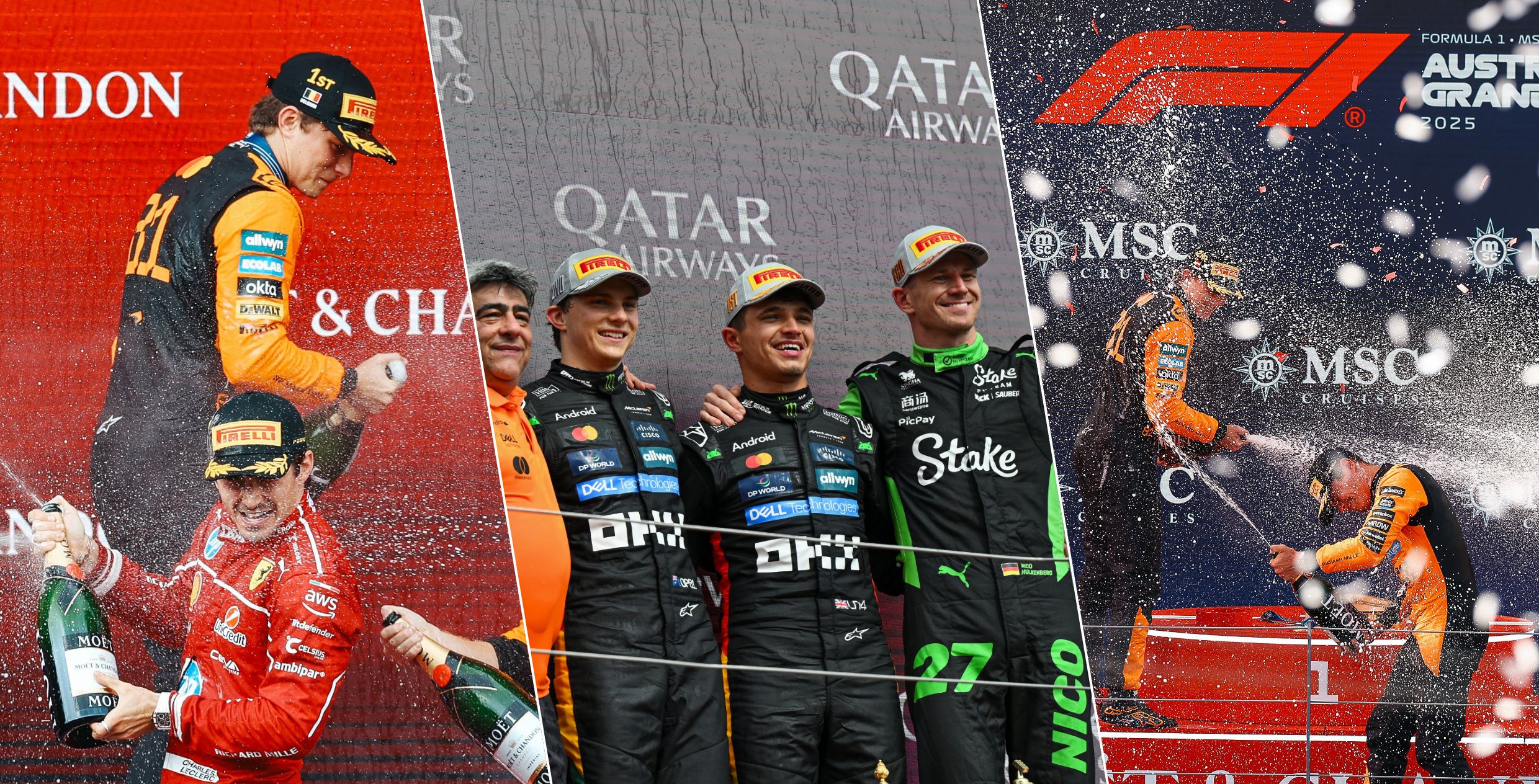
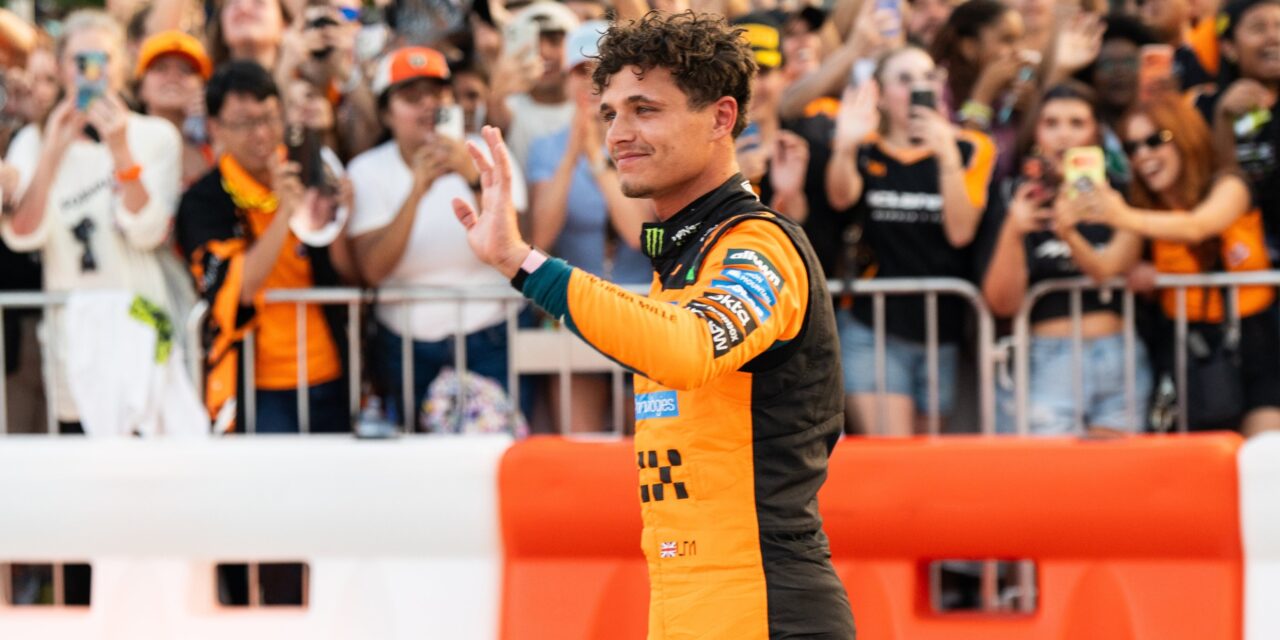
Lando Norris believes Formula 1 drivers should have a stronger voice in shaping the sport’s future regulations, but admits the commercial realities of the championship make change difficult.
As criticism grows around Formula 1’s 2026 rules package, particularly the heavy emphasis on electrical deployment and energy management, drivers have become increasingly vocal about the direction of the sport.
The recent changes to deployment and harvesting systems, along with further tweaks already planned for next season, have only added to the debate around whether the current regulations were flawed from the beginning.
Many drivers and fans have criticised the racing style created by the new generation of cars, especially overtakes driven more by battery levels than outright racing skill.
Lewis Hamilton pushes for drivers to have “a seat at the table”
The frustration among drivers partly comes from feeling excluded during the original rule-making process.
The core 50:50 balance between combustion engine power and electrical energy was agreed during meetings between Formula 1 and manufacturers back in 2022, long before drivers properly experienced the cars in simulation.
Ahead of the Miami Grand Prix, Lewis Hamilton argued drivers deserved far more influence over future decisions.
Only six drivers, including Ferrari’s Charles Leclerc, were consulted regarding the latest Miami regulation tweaks.
Defending world champion Lando Norris agrees drivers should have more involvement going forward.
“We just have to give our input, honestly,” he told select media, including Motorsport.com.
“We want the fans to have a great time, we want ourselves to have a good time. We also want F1 to be what we’ve always grown up seeing – just flat-out racing, which is not what we’ve had so far.”
Norris criticises battery-driven overtakes
One of the biggest complaints surrounding the current Formula 1 regulations is how overtaking often depends on energy deployment rather than driver skill.
Norris made clear he does not believe battery advantages should define racing.
“And having good racing is not necessarily having someone at 100% battery and having someone on zero. You know, that’s not how proper racing should be done.”
“It should be done by trying to allow cars to follow closer by having less weight, better tyres, more resilient to kind of following issues and temperatures and things like that – not by implementing batteries and wings that do all of this stuff we’re doing now.”
The FIA and Formula 1 have already acknowledged concerns around the current rules package, with both Stefano Domenicali and FIA single-seater boss Nikolas Tombazis admitting the regulations were heavily influenced by manufacturers pushing electrification during the early 2020s.
Since then, the automotive industry itself has shifted direction, leaving Formula 1 trying to adapt.
“It’s a business” says Norris
Despite agreeing with Hamilton’s push for greater driver involvement, Norris admits Formula 1 is far more complicated than simply giving drivers final control.
“It can just be done in a slightly different way, and that’s something that us drivers we’re all wishing for in the future,” continued Norris.
“But because of the bigger picture, because you have manufacturers and partners and teams and it’s a business involved, then some things are not so simple.”
The current regulations rely on several compromises, including active aerodynamics and tightly controlled energy deployment systems, to make the concept workable.
While the 2027 rules will move closer to a 60:40 split between combustion and electric power, discussions are already ongoing about potentially returning to naturally aspirated V8 engines later in the decade.
That idea reportedly has support from figures including FIA president Mohammed Ben Sulayem, although manufacturers remain divided.
Honda and Audi are believed to oppose the concept, while Ford and Cadillac appear more open to it.
Norris wants Formula 1 to avoid another rushed rules era
With the current power unit cycle running until 2030, Norris believes Formula 1 must take more time when designing the next generation of regulations.
“What we want as drivers is also what will be better for the fans to see,” he said.
“It’s a business at the end of the day, so you have to balance the business side, which is obviously where we don’t have a lot of say. But we’re making progress with the FIA. I think they’ve done a good job in trying to improve things.”
“The bigger things and the things we want more in the future are the things I want to take more time on.”
For now, Formula 1 continues trying to balance entertainment, technology and manufacturer interests, while drivers push for a return to more natural racing.