
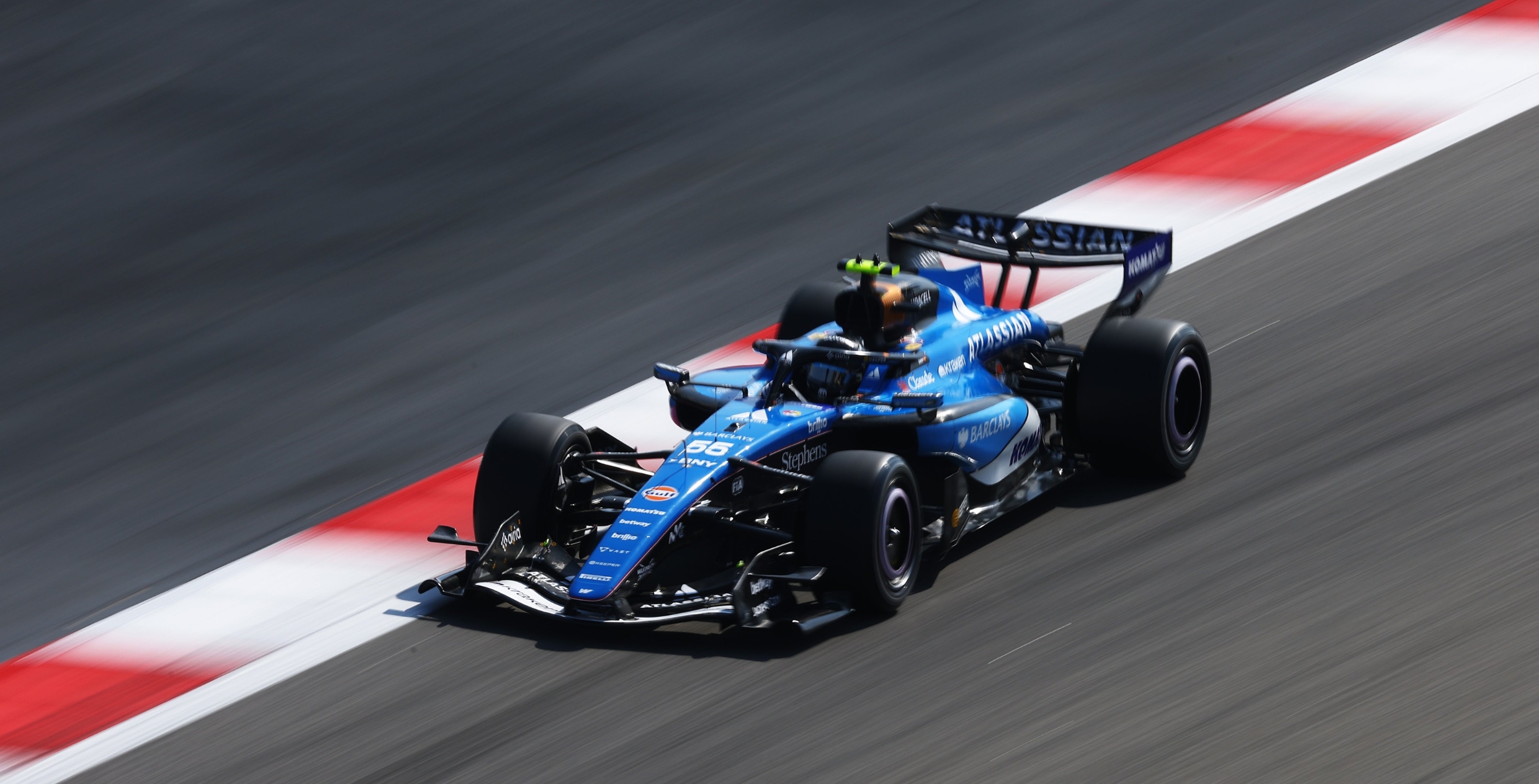
There is a growing concern among Formula 1’s midfield teams that the sport’s traditional powerhouses could once again pull clear under the sweeping 2026 regulation changes, leaving the rest battling for minor points rather than podiums.
With active aerodynamics and a heavier reliance on electrical energy reshaping both chassis and power unit philosophy, many hoped the reset would compress the field. Instead, early signs from Bahrain testing suggest the opposite. McLaren, Mercedes, Red Bull and Ferrari appear poised to remain at the front.
That is certainly the impression shared by Haas’ Esteban Ocon, Williams’ Carlos Sainz and Racing Bulls team principal Alan Permane following the opening pre-season test in Sakhir.
“It seems like the gap to the top teams, the four teams that used to lead last year, has increased,” Sainz contritely commented in a video posted by Williams on social media, “and it’s going to require a lot of hard work over the next few months, the next few races, going into the first part of the season, to try and recover that gap.”
Ocon struck a similarly cautious tone when asked whether the leading quartet were set to dominate once more.
“I would like to respond something else to you. But, at the moment, the top four are well locked. Where you saw last year the top 10 within three, four tenths in some races, now I think the top eight is maybe within three, four tenths – but after that, it’s seconds away, I think.
“I’m not saying that will stay until Melbourne, because, obviously, we’ve seen many teams bringing updates to their car, from one day of test to another. We saw Audi making a big jump as well in performance with their new bodywork and stuff, maybe something else. But, yeah, at the moment, the midfield is much further away compared to last year.”
Early Bahrain Pace Tells a Story
Mercedes topped the headline times in Bahrain courtesy of Kimi Antonelli’s 1m33.669s, while Ferrari and McLaren were close behind. Red Bull’s best effort came earlier in the test, with Max Verstappen clocking a 1m34.798s on day one.
Behind them, the gap appeared more significant. Haas led the midfield with Oliver Bearman’s 1m35.394s, followed by team-mate Ocon. Alpine’s Franco Colapinto was the only other driver to dip into the 1m35s.
Fastest Times from Bahrain Test 1 per Team
| P | DRIVER | TEAM | Time (day) |
|---|---|---|---|
| 1 | Antonelli | Mercedes | 1’33″669 (D3) |
| 2 | Hamilton | Ferrari | 1’34″209 (D3) |
| 3 | Piastri | McLaren | 1’34″549 (D3) |
| 4 | Verstappen | Red Bull | 1’34″798 (D1) |
| 5 | Bearman | Haas | 1’35″394 (D2) |
| 6 | Colapinto | Alpine | 1’35″806 (D3) |
| 7 | Hulkenberg | Audi | 1’36″291 (D3) |
| 8 | Albon | Williams | 1’36″793 (D3) |
| 9 | Lawson | Racing Bulls | 1’36″808 (D3) |
| 10 | Bottas | Cadillac | 1’36″824 (D2) |
| 11 | Stroll | Aston Martin | 1’38″165 (D3) |
But it was not just about single-lap speed.
“We’ve seen some of the big guys do some race distances where you kind of know roughly what the starting fuel and the finishing fuel is, and we can see that they’re very quick,” Permane pointed out.
“But I don’t think that’s a surprise. Whenever you have a big regulation change, you’re going to get the top teams move away and the smaller teams move back. I don’t think anyone should be surprised by that.”
Why the Gap Could Grow
Permane believes the close racing seen up to 2025 was a product of stable regulations, cost caps and aerodynamic testing restrictions that favoured lower-ranked teams.
“That helps the smaller teams catch up,” he added.
However, even within a cost-capped era, structural advantages remain.
“You still have the top aerodynamicists who want to work at the top teams.”
Asked why that trend continues, Permane offered a blunt comparison:
“Why would the top footballer want to play for the top football team? It’s the same thing. People want to win. We’re all very, very competitive. And from drivers all the way through the organisation, everyone is competitive and wants to do well. And I think that’s just natural.
“That is not to put down any team. But I think it’s natural that the more successful engineers gravitate to the more successful teams – and that skews things.
“Also it’s a little bit historical, I would imagine as well. Because for many years we ran without budget caps. And the gap between the [teams] was probably – certainly – in the tens of millions, if not in the hundreds of millions, that people were spending, between the very top and the very little. And that enables you to develop further infrastructure and tools that are still being used now.
“The regulations hopefully will stay stable and we’ll see it close up. What we want more than anything, or what I want more than anything, and I know what you guys want more than anything, is close racing. You don’t want one team or one PU manufacturer or one driver dominating the whole thing. We want to have some racing. We want to turn up on a Friday not knowing who’s going to win on a Sunday. And I think that’s the aim of everybody.”
For now, though, the midfield’s fear is clear. The 2026 reset may not have reset everything after all.