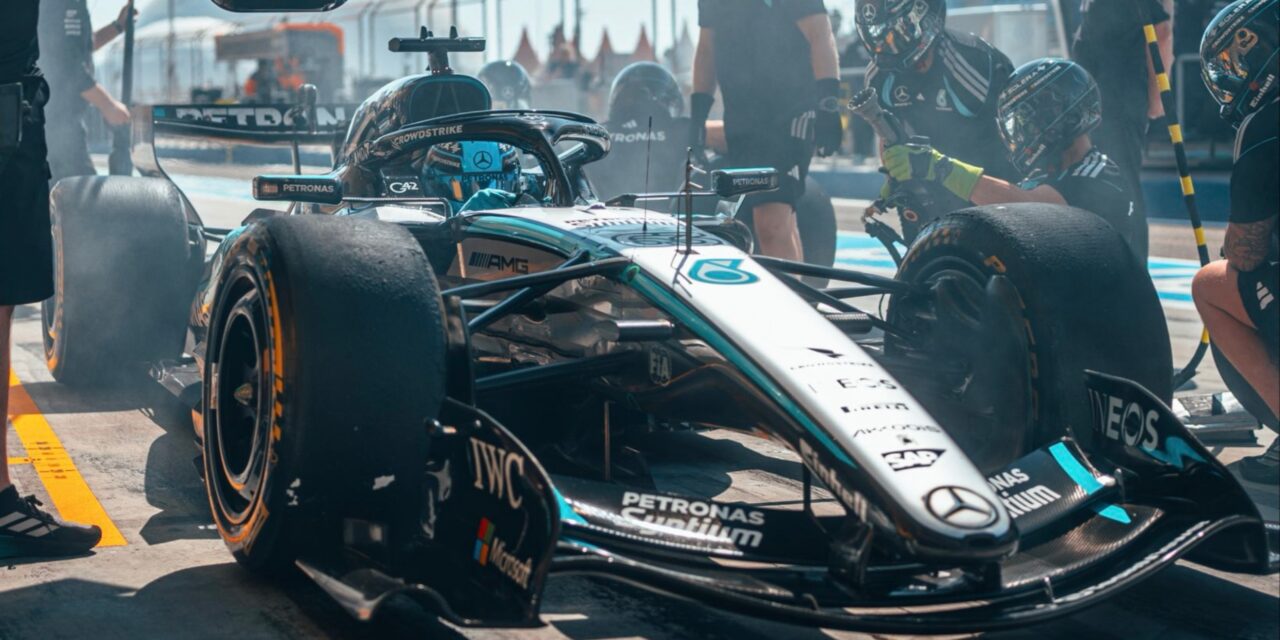
Petronas has received FIA approval for the sustainable fuel that will power Mercedes engines during the 2026 Formula 1 season, clearing a major regulatory hurdle just days before the Australian Grand Prix.
The Malaysian energy company supplies fuel for Mercedes as well as its customer teams McLaren, Williams and Alpine, meaning four teams on the grid will run the newly homologated product as the championship begins in Melbourne.
The approval arrived at the final stages of the process after the FIA introduced a significantly stricter certification system for the new generation of sustainable fuels required under the 2026 regulations.
Formula 1’s move to fully sustainable fuels forms a central part of the sport’s new technical era. Alongside the revised hybrid power units debuting this season, the fuel itself must now meet strict environmental and production standards designed to eliminate fossil fuel use while maintaining performance.
Up until the end of the 2025 season, the process for approving fuel was relatively straightforward. Manufacturers would send samples to a laboratory affiliated with the FIA, where the composition would be analysed and verified against the sport’s regulations.
That system allowed approval to be granted within roughly 20 days.
For 2026, however, the procedure has expanded dramatically.
Instead of focusing solely on the chemical composition of the final fuel product, the FIA now requires verification of the entire production chain. The governing body has delegated the certification process to an independent external organisation responsible for auditing every stage involved in producing the fuel.
This means the homologation process now involves far more than laboratory analysis.
Inspectors from the certification body must visit production facilities directly to ensure that every stage of the manufacturing process complies with FIA sustainability regulations. The entire supply chain is reviewed, including how raw materials are sourced, processed and blended.
The certification also requires full documentation of every component used in the fuel mixture. If suppliers are involved at any stage of production, their certifications must also be examined and validated.
Under the new system, even a single missing certification anywhere in the chain can prevent the fuel from receiving approval, regardless of whether the final product meets the performance and chemical specifications required for Formula 1 competition.
While manufacturers had begun preparing for the process well in advance, the complexity of the system has made timelines significantly longer compared with previous years.
Petronas and Mercedes have not publicly commented on the approval process, but the late homologation appears to have been linked to the extensive documentation and verification required across the supply chain.
With the certification now secured, Mercedes powered teams will head into the Australian Grand Prix confident that their fuel supply meets the FIA’s new sustainability standards as Formula 1 begins its most significant technical reset in decades.