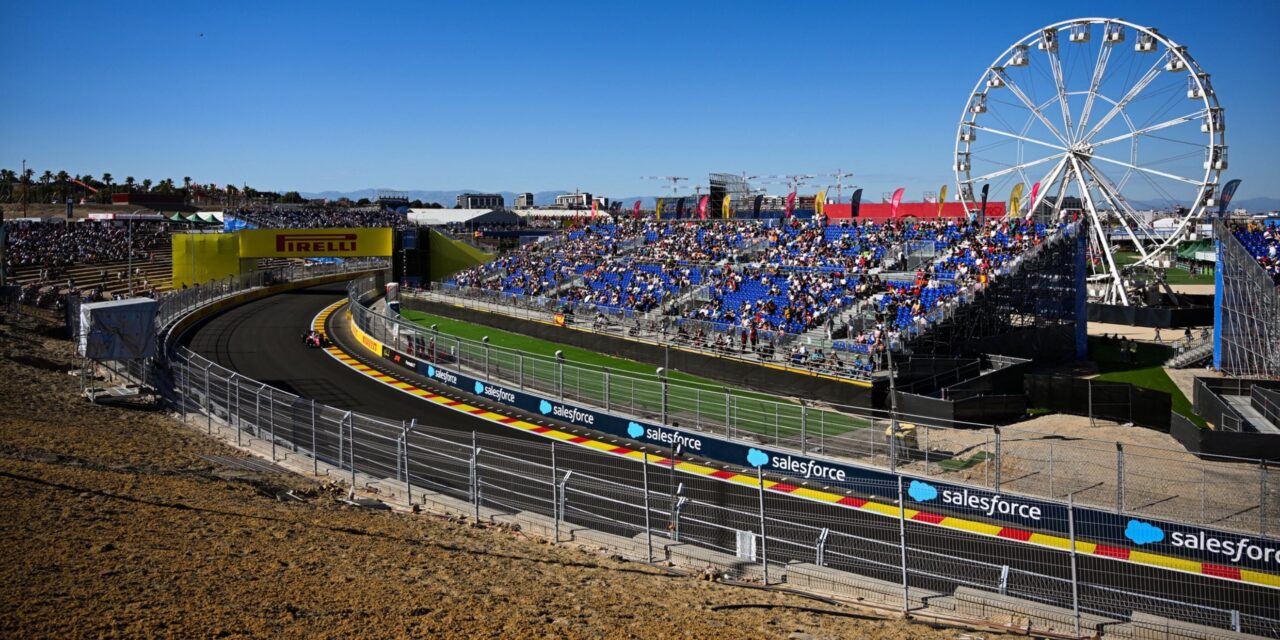
Spanish Grand Prix organisers have confirmed they are open to changing the Madring circuit ahead of the 2027 Formula 1 race after its debut weekend produced limited overtaking.
The new 5.4km Madrid circuit hosted its first competitive Formula 1 weekend with drivers and teams praising several aspects of the venue, including the facilities and the challenge of driving the track. Its combination of medium and high-speed corners also produced an intense qualifying session, eventually topped by Lando Norris.
Sunday’s race exposed a major weakness, though. Passing opportunities were limited, leaving drivers struggling to make progress even when following cars with slower race pace. The same problem appeared during the Formula 2 and Formula 3 races, increasing calls for changes before Formula 1 returns to Madrid next season.
FIA Already Recommends Madring Changes for 2027
The main passing opportunity was expected to come at the Turn 5 chicane following the longest straight at Madring. In practice, the design of the corner made overtaking difficult because drivers needed to brake while also turning into the corner.
Drivers raised the issue during Friday night’s briefing. Their concerns focused on several combined corner entries around Madring, where braking and steering happen together. The layout gave the defending driver an easier opportunity to protect position and made it difficult for the following car to attempt a conventional late-braking move.
Another concern involved the length of the pitlane. Drivers felt the time lost during a pitstop discouraged teams from attempting more aggressive strategies, reducing another potential source of variation during the Grand Prix.
Spanish Grand Prix managing director Luis Garcia Abad confirmed after Sunday’s race that the organisers had already received recommendations from the FIA about potential changes.
“Being honest with you, the FIA defined clearly which is the way to improve the track layout, and we will be open because we will have to reinstall the track for the next year,” Abad told Motorsport.com.
“I really believe that the drivers enjoyed qualifying a lot. But for sure we will try to make an improvement for next year.”
Madrid Has Room to Make Significant Changes
The 2026 Spanish Grand Prix represented the beginning of a 10-year agreement for Madrid, giving organisers a long-term reason to improve the circuit rather than accept the problems seen during its debut.
One advantage comes from the design of Madring itself. The northern section of the circuit was created on previously empty land rather than being restricted entirely by existing roads and permanent structures. That gives organisers greater flexibility when considering modifications.
“We have the space, we have a venue, we have the facilities, we have the capacity to do it,” Abad promised.
“I’m sure that FOM, FIA, and ourselves, we will try. If we can improve something, we will do it.”
The comments suggest Madring’s current configuration is not fixed for future Spanish Grands Prix. With sections of the track reinstalled for each event, organisers have an opportunity to respond to feedback from the FIA and drivers before the second Madrid race in 2027.
Lando Norris Suggests Major Madring Layout Change
Reigning world champion Norris was among the drivers calling for improvements after Sunday’s Grand Prix. The McLaren driver started from pole and showed strong race pace, but an unfortunately timed virtual safety car dropped him behind Kimi Antonelli and Max Verstappen.
Norris recovered to third but found overtaking Verstappen extremely difficult despite closing onto the back of the Red Bull during the final stages. His experience gave him a clear view of the problems facing drivers trying to race around Madring.
“To me, it’s not a great racetrack. It’s great in qualifying, but a straight line from Turn 17 straight to Turn 20 [would help], to have a much wider entry like Austin Turn 1 or Turn 10, a big hairpin. You’ll create much better opportunities for everyone and you’ll be able to enjoy the race.
“There are some simple changes and maybe some trickier ones, like Turn 5, 6, 7. It’s hard to know exactly what is the best thing. The fact you have to turn and brake [at the same time] basically defeats the whole object of racing.”
Norris’ proposal would remove part of the existing sequence between Turns 17 and 20 and create a more direct approach towards a wider braking zone. Such a configuration would aim to give drivers a better opportunity to move alongside another car before reaching the corner.
Turn 5 Could Also Become a Focus
Turn 5, Turn 6 and Turn 7 are another area likely to receive attention. Turn 5 was intended to provide one of Madring’s primary overtaking opportunities, but the first race showed how difficult the approach made conventional passing attempts.
Rather than arriving at a simple heavy braking zone after the longest straight, drivers have to manage steering input alongside braking. That limits opportunities to change lines late and makes defending easier.
Any redesign will need to retain the elements drivers enjoyed while improving Sunday’s racing. The faster sections, particularly La Monumental, gave Madring a distinctive challenge and contributed to a qualifying session where commitment carried a high price for mistakes.
Madring Faces Changes After First Spanish GP
The inaugural race ultimately produced a strategic battle rather than sustained wheel-to-wheel action. Antonelli took his eighth victory of the season after Norris lost his advantage around the early virtual safety car period, with Verstappen finishing second and Norris third.
Once the leading drivers settled into position, passing proved difficult. Norris closed on Verstappen late in the race but found no realistic route past, while several drivers further down the order faced similar problems.
Organisers now have a full weekend of Formula 1, Formula 2 and Formula 3 data to assess before work begins on the 2027 event. With the FIA already offering recommendations and the Spanish Grand Prix management openly supporting improvements, changes to Madring appear firmly under consideration.
The first Madrid weekend showed the circuit works well as a qualifying challenge. The priority for 2027 will be finding ways to preserve that challenge while creating stronger braking zones and more opportunities for drivers to race side by side.