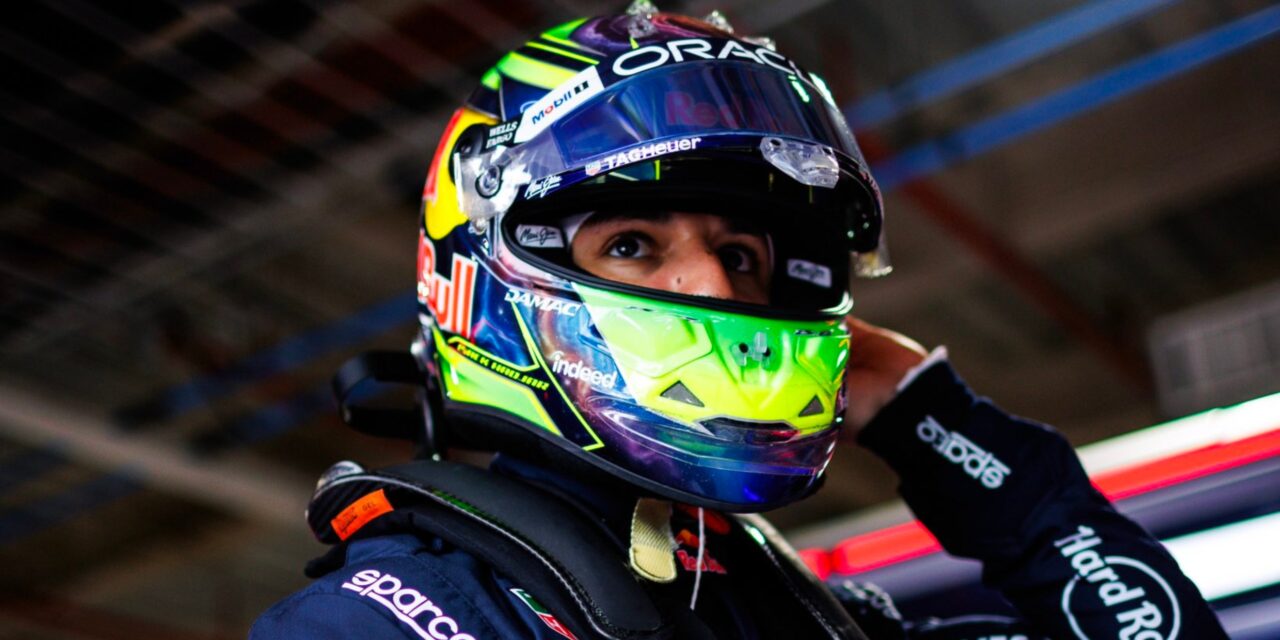
Isack Hadjar arrived at Red Bull looking like the solution to the team’s long-running second driver problem. But after a disastrous Miami Grand Prix weekend, questions are already starting to emerge about whether he could become the next driver to struggle alongside Max Verstappen.
Miami marked Hadjar’s toughest Formula 1 weekend so far. Poor pace, a qualifying disqualification and a race-ending crash combined to create a difficult few days for the young Frenchman. Still, Red Bull insists there is no reason to panic.
Miami Grand Prix nightmare for Hadjar
Hadjar never looked fully comfortable across the Miami weekend.
While Verstappen fought near the front in the upgraded RB22, Hadjar struggled to match his team-mate’s pace. He qualified and finished ninth in the sprint race while Verstappen secured fifth in both sessions.
Things then became worse ahead of the grand prix itself.
Hadjar was disqualified from qualifying after Red Bull discovered the car’s floorboards failed legality checks. The issue forced him into a pitlane start before the race had even begun.
Red Bull admitted the mistake came from the team itself.
“The car was found to be two millimetres too wide,” Laurent Mekies explained. “I call them [the part] the FIA bargeboard. It’s the compulsory part that we have there. We should have spotted it earlier in our routine checks. We did not. It’s painful, but it’s easy to fix.”
Early progress ends in costly crash
Despite starting from the pitlane, Hadjar initially recovered strongly.
He climbed into 15th position by lap five before crashing heavily after clipping the inside wall at Turn 14, which broke his suspension and sent him into the barriers.
After the race, Hadjar admitted the mistake came from pushing too hard too early.
“I was too eager and too excited about making those moves and just ruined myself,” Hadjar told Sky Sports F1. “It was easy to overtake and [I] should have been more cautious. There was no point trying to flirt with the limit in this corner. So I’m really, really pissed off.”
The crash capped off a frustrating weekend where he admitted he never fully understood the upgraded Red Bull package.
“It’s the first time I really struggle with my overall pace. This is new and I really need to dig deep because I don’t want another weekend like this.”
Red Bull refuses to panic
Despite the difficult weekend, Red Bull boss Laurent Mekies remains fully supportive of Hadjar.
“I don’t think we should qualify that as a worry,” Mekies said about Hadjar’s crash. “We had a tough weekend. This has not helped our performance. In terms of driving and in terms of rhythm, he still didn’t get into the right rhythm.”
“I think he would have been strong in the race, and was strong for the little he could have shown. I don’t think we are worried.”
Mekies also acknowledged the team contributed heavily to Hadjar’s difficult weekend.
“We certainly didn’t have a clean weekend. We didn’t help him either by sending him from the back of the grid after our mistake with the legality of the car. So no, not worried.”
“Not a clean weekend, but there is every indication that we’ll be in the right speed again in Montreal.”
Could Hadjar lose his Red Bull seat?
The pressure around Hadjar exists because Red Bull has repeatedly struggled to find a consistent second driver since Daniel Ricciardo left in 2018.
Pierre Gasly, Alex Albon, Sergio Perez, Liam Lawson and others all struggled to consistently match Verstappen. Some lost confidence quickly under the pressure of driving alongside the four-time world champion.
That history means every difficult weekend for Hadjar will attract attention.
The concern for Red Bull is not simply the crash itself. It is the gap to Verstappen. In Miami, Hadjar was regularly several tenths slower and never looked fully comfortable with the upgraded RB22.
Verstappen remains the benchmark
Hadjar himself admitted Verstappen’s performances highlighted the potential in the upgraded car.
“Even though I couldn’t put it together, I couldn’t do what I wanted, I still felt faster than the last two weekends for example,” he said.
“If I do the job, put it together, you look at Max, what he’s done yesterday [in the sprint], what he’s doing now [in the grand prix]. Clearly the car made a step. It’s not over, but I’m happy they found something.”
That may be the key takeaway from Miami.
Hadjar still believes the pace exists. Red Bull believes the pace exists. The challenge now is whether the 21-year-old can unlock it consistently enough to avoid becoming another name on Red Bull’s growing list of second-driver struggles.
One difficult weekend alone will not define Hadjar’s Red Bull future. But Miami showed how quickly pressure builds inside Formula 1’s toughest seat.